
Why Bryan Johnson Should Be My Client
(And What His Team Still Doesn’t Understand About Real Longevity)
By Brenden Henry

Bryan Johnson is one of the most disciplined people in the longevity space.
He tracks markers obsessively.
He measures relentlessly.
He executes with a level of consistency that almost nobody else can match.
And yet, despite all of that, his longevity strategy is fundamentally “incomplete”.
Not because he isn’t trying hard enough.
Not because he lacks data.
And not because he lacks resources.
But because he is optimizing the symptoms of aging, not the upstream control systems which control aging.
And when he does try to optimize upstream control systems…
He misses the mark.
Every single time.
That’s why Bryan Johnson should be my client.
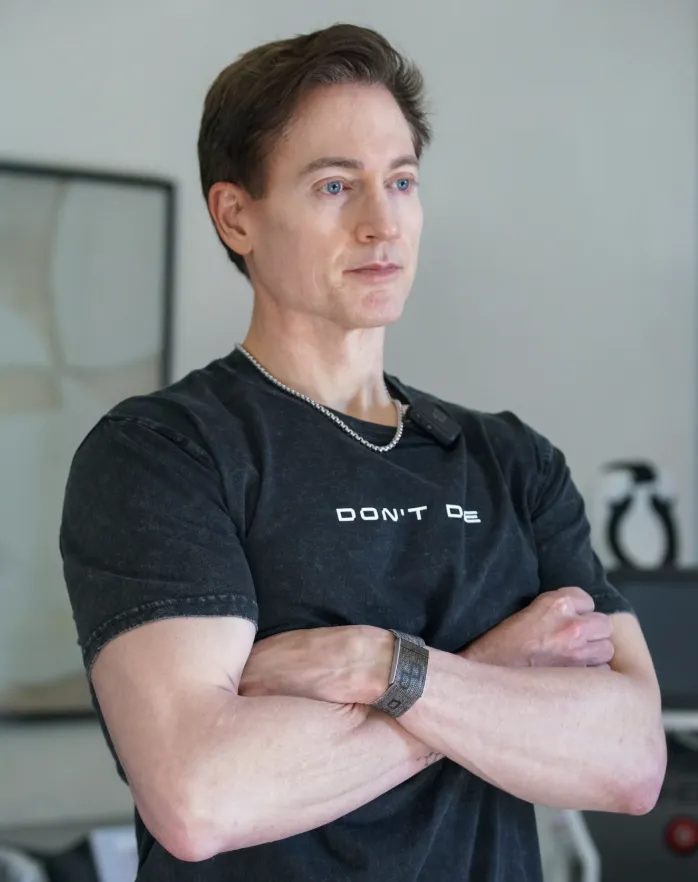
Longevity Is Controlled by Systems Blueprint Barely Addresses
Aging is governed by upstream biological systems. These are the control layers that determine how every downstream metric behaves over time.
1. Epigenetic Control Is Being Measured, Not Controlled
Bryan frequently references epigenetic clocks.
These are tools to measure methylation patterns within certain regions of DNA, known as CPG sites.
Blueprint tracks methylation outcomes, yet does not actively stabilize the mechanisms that preserve gene expression over time, such as chromatin architecture.
Aging is, at its core, a loss of gene expression accuracy.
It is a control layer.
And refusing to address such a pivotal control layer just because epigenetic clocks “look okay”, is fundamentally flawed.
Blueprint treats epigenetics as a scoreboard with its "rejuvenation olympics”.
Since Epigenetics is a control layer, it cannot be managed passively.
2. Senolytics Are Being Approached Backwards
Blueprint has deployed strategies such as dasatinib and quercetin, for knocking down senescence.
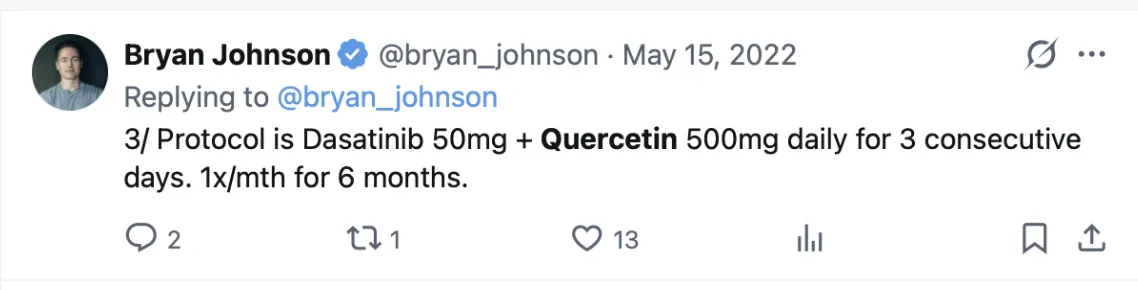
This is not inherently wrong, however, the problem is how and when they are used.
Your body naturally has some senescent cells, and although clearing excess is beneficial for age related diseases, you do not need to perform these interventions often.
Using them every single month, like Bryan started doing, would imply that their accumulation is so constant that you need constant suppression.
This is not true and it's dangerous.
For example, dasatinib can suppress the bone marrow, especially when it's overused.
And this is likely why monthly use of it is reflected as worsening epigenetic clocks.

The bone marrow is an integral part of the immune system.
And the immune system is an integral part of preventing further accumulation of senescent cells.
Clearing senescent cells without ALSO restoring immune competence and regenerative capacity predictably would lead to rebound senescence and impaired tissue repair.
3. “Bryan attempted immune rejuvenation without rebuilding the immune system.”
True immune rejuvenation cannot occur without addressing the full immune axis.
The bone marrow produces lymphoid progenitor cells.
Those progenitors migrate to the thymus, where they mature into functional T-cells.
The pineal gland supports thymic protection and immune signaling through peptide regulation.
This is a sequence.
Attempting to rejuvenate the thymus without first restoring the bone marrow that feeds it is biologically incomplete.
Blueprint attempted to replicate the TRIIM trial using growth hormone, metformin, and DHEA. However, two critical errors occurred.
First, the protocol did not address bone marrow regeneration at all, despite the fact that immune cell output originates there.
Second, the study itself was misread, since Bryan declared he was following the dose of hgh used in the TRIIM trial…
But the dose he said he took, on video, 0.6 mg (~1.8 IU) wasn’t even what TRIIM used.
(source 33:41-34:20) https://youtu.be/_PG6sLMuWS8?t=2021
TRIIM used 0.015 mg/kg ¹, which for Bryan's weight would be about 1.11 mg (~3.3 IU), almost double what he took.
Bryan also ended up getting horrible side effects from the growth hormone and had to terminate it.

4. Rapamycin suppressed Bryan's immune system even further and his team misread the epigenetic clock data
Rapamycin is an inducer of “autophagy”.
Having adequate autophagy is very important for the context of cellular cleanup and longevity.
But more of a good thing is not better.
Used incorrectly, it suppresses immune regeneration, impairs wound healing, and increases the heart rate (rapamycin).
Bryan publicly documented testing multiple rapamycin protocols at weekly 5, 6, and 10 mg dosing, bi-weekly 13 mg schedules, and alternating 6/13 mg regimens, before discontinuing it due to side effects.
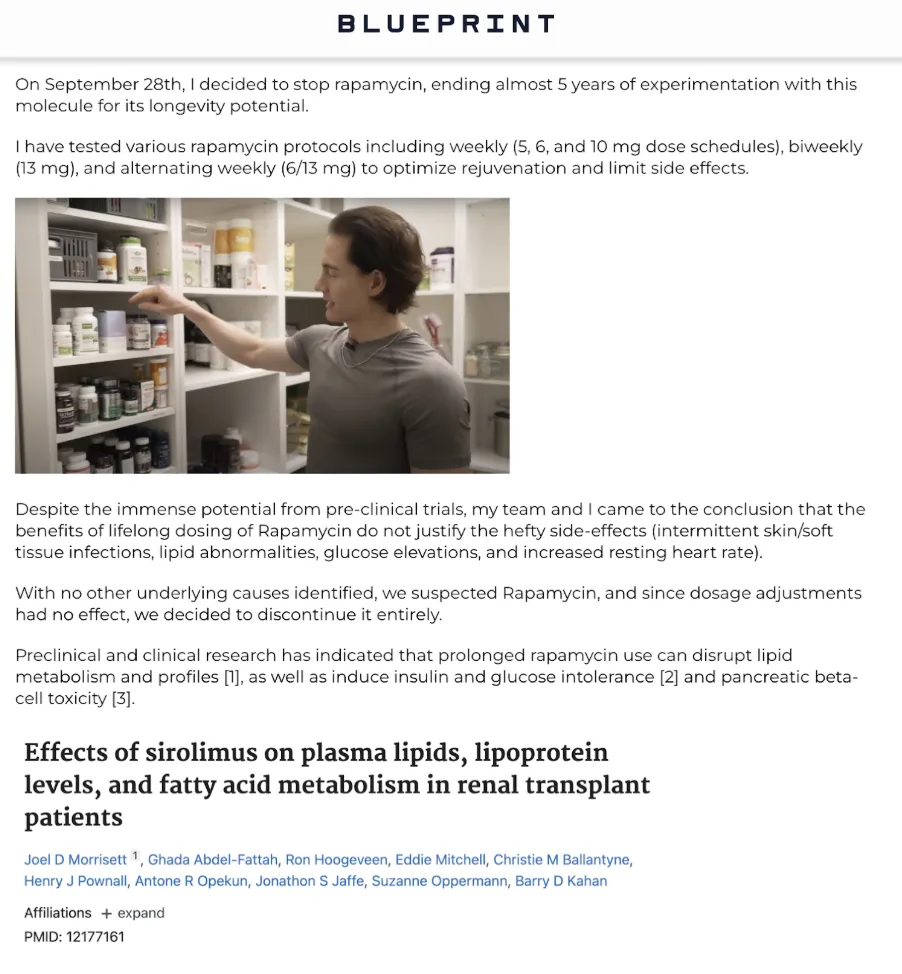
Those side effects were not surprising.
That is close to the level that a transplant recipient patient would be put on to prevent organ rejection.
Blueprint had already applied multiple measures that suppress growth signaling and activate AMPK such as chronic calorie restriction, frequent fasting, high training volume, and metabolic stressors.
Layering aggressive rapamycin dosing on top of that is not synergy.
It is pushing it too far.
He had also stated that rapamycin worsened aging on 16 epigenetic clocks.

But Rapamycin did not increase aging on 16 clocks. The low dose raised biological age in one out of 16 clocks, and the high dose raised it in two out of 16 clocks².
5. Mitochondria Are Discussed, But Not Treated as a Primary Control System
Blueprint talks about mitochondria.
And for good reason.
Mitochondria regulate metabolism, immune signaling, apoptosis, epigenetic state, and stem cell fate.
One of the most important pillars to optimize, yet…
There aren't even any “DIRECT” mitochondrial interventions here.
Bryan mentioned taking NMN or NR, which are precursors to NAD+, which may benefit mitochondria for those over 40, but…
That in itself is not complete mitochondrial optimization.
Urolithin A increases mitophagy, but without concurrent biogenesis support, it can reduce mitochondrial density and impair energy resilience.
6. The GLP-1 Misinterpretation: Longevity Effects in old Mice Don’t Translate to young Humans.
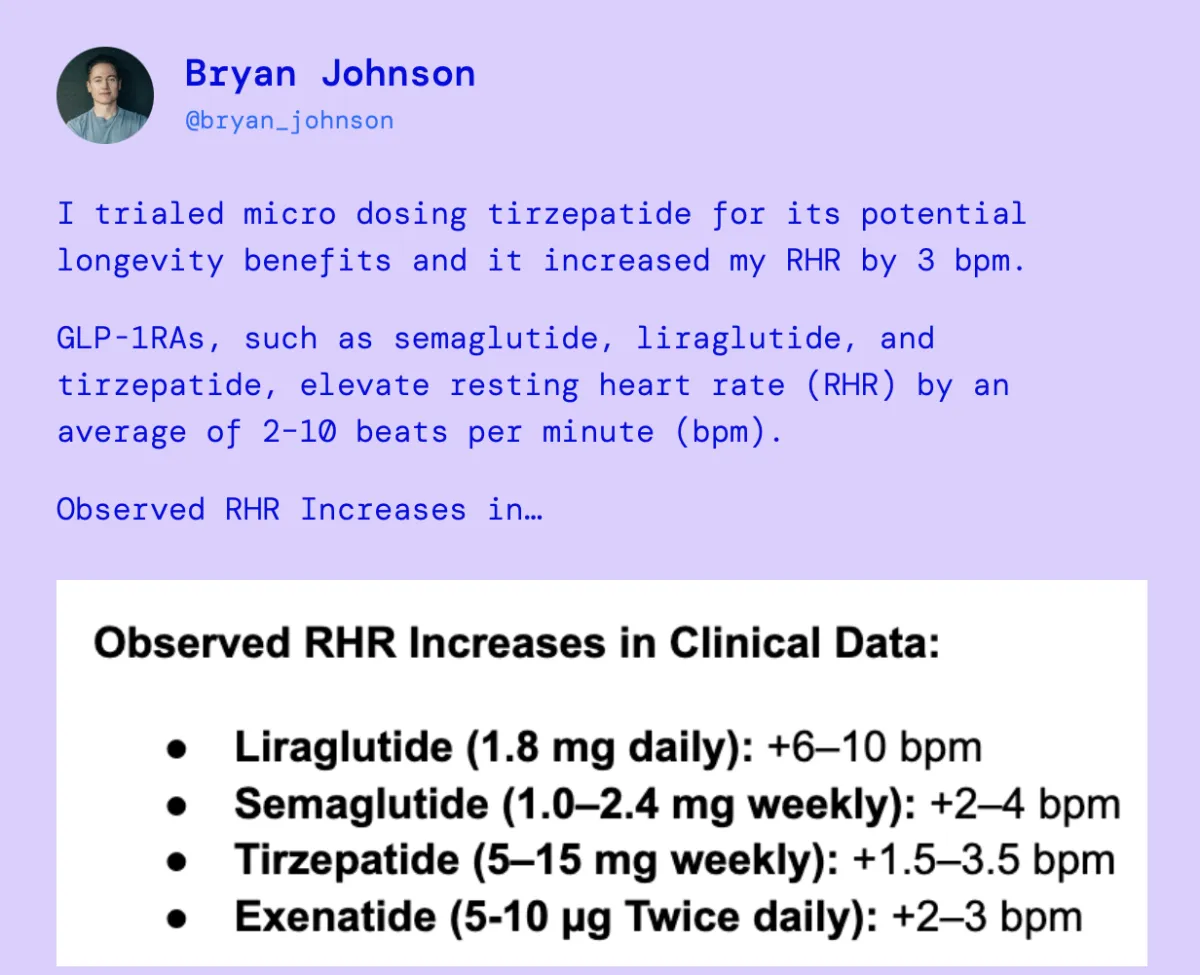
Bryan, was microdosing GLP1 agonists, in hopes of longevity. Theres no data to support it being a good idea for longevity.
The rejuvenation effects were only in aged mice, not humans³. The mechanism was hypothalamic activation of the GLP1 receptor triggers an increase in the pro opiomelanocortin cascade, which can then have immunomodulatory and anti-inflammatory and additional mitochondrial benefits downstream which can then lead to rejuvenation.
The GLP-1 agonist did not show benefit to rejuvenation in young mice and it makes total sense in this case, since the POMC is not suppressed.
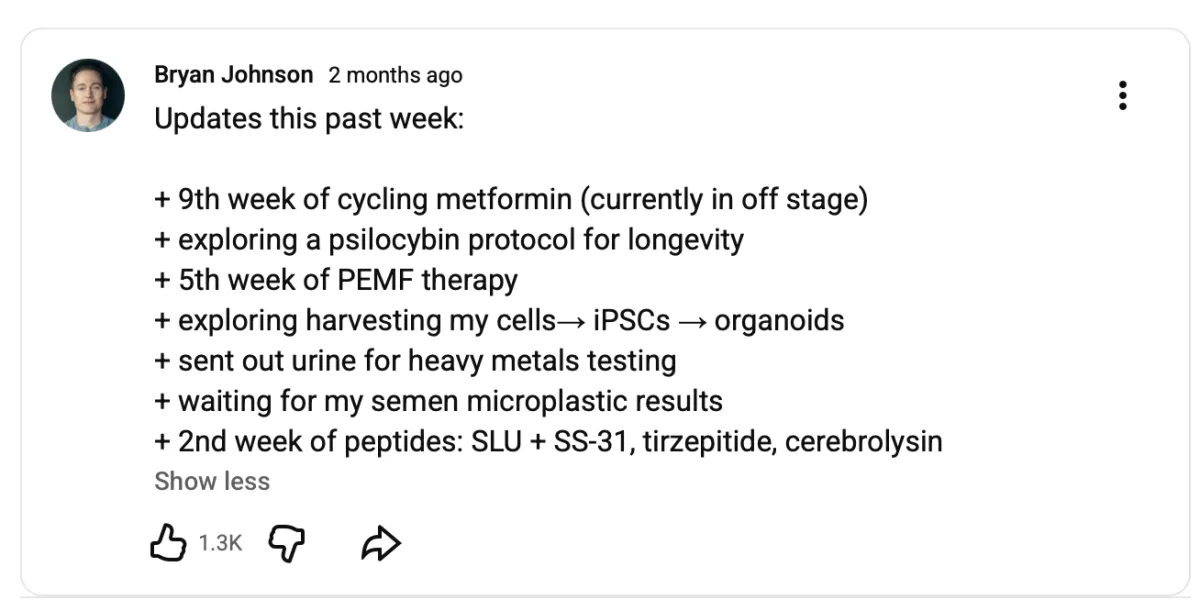
He also said SLU (referring to SLU-PP-332) was a peptide, when it's not, it's a drug, and it only has studies in mice, and lacks safety studies.
Considering all of the side effects Bryan has had from other interventions, I thought his team would be a little more cautious than that.
7. The “12 Pillars” Problem: Optimizing Interfaces Instead of Foundations
Blueprint focuses heavily on areas such as sleep, diet, exercise, and supplements.
These are interfaces.
You can optimize every interface perfectly and still lose the system if the foundations are failing.
When you step back, every failure in Blueprint traces to the same root problem: not working fully upstream to address the main causes of aging…
And not deciphering studies accurately.
A Small but Telling Detail: Blueprint Removed Red Yeast Rice
This part may surprise some people, but I have reviewed Bryan's blueprint supplements in the past. I even pointed out things which others, who reviewed his supplement line up, missed.

One such thing was that red yeast rice, included in an early Blueprint formulation, was a poor longevity choice due to:
• statin-like mitochondrial inhibition from monokolin k
• CoQ10 depletion
• And liver injury risk (documented case studies)
A client of mine forwarded that analysis directly to Bryan.

Not long after, red yeast rice was removed from Blueprints combination supplement for the same reason I pointed out in my video.
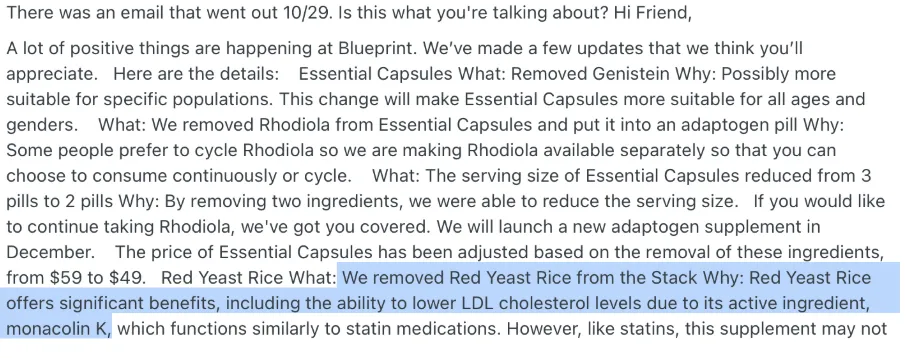
That tells me two things:
1. Bryan is listening
2. The system is still reactive, not engineered
That’s not a criticism either. It’s just evidence that Blueprint lacks a higher-order biological framework and Bryan may be open to hearing it.
The Difference Between Blueprint and a Biological Recode System
Blueprint is not inherently wrong, it's clearly an optimization protocol.
But it's working on an interface level, and has hit its ceiling there.
From here forward, longevity only improves by rebuilding the systems that determine how those interfaces behave in the first place.
That transition from optimization to biological control is where almost everyone gets stuck.
And it's where my work begins.
Final Thought
Bryan Johnson is doing more than almost anyone alive to fight aging.
That’s exactly why the remaining errors matter.
At this level, progress doesn’t come from more effort.
It comes from better architecture.
And that’s why Bryan Johnson shouldn’t just try to inspire people to "not die".
He should be my client.
If you would like to discover my real system for reversing aging on a system wide level, You can get the biological recode system here-
Or if you want a personalized program, you can go here- https://cuttingedgelongevity.com/private
To Rewriting Your Biology,
Brenden Henry
Former Biomedical Engineer
Founder of Peptide Science Institute &
CuttingEdgeLongevity

support:
sms +1 877-834-9117
email [email protected]