
Why Chronic Stress Doesn’t Break You
(Until the Systems Collapse)
By Brenden Henry
Stress doesn’t damage the body right away.
In fact, a certain amount of stress makes you stronger, because you recover, rebuild, and adapt.
The problem starts when the load stays high and recovery stops catching up.
That’s when the body shifts into compensation.
You keep functioning.
You keep producing.
You keep handling pressure.
But you’re doing it the way someone takes out a loan to cover normal expenses.
Then one day the bill comes due and it arrives as “sudden” aging, burnout, immune weakening, or a body that no longer rebounds like it once did.
People who are good at pushing themselves are especially vulnerable to this because they’ve learned how to stay functional under pressure.
And that’s exactly why the damage stays invisible for so long.
Stress Doesn’t Cause Failure. It Delays It.

¹
Long before burnout became a cultural thing, physiologist Hans Selye described what stress actually does to living systems.
He described 3 stages, alarm, resistance, and exhaustion.
Alarm triggers adaptation when recovery is still possible.
Resistance helps to preserve function when recovery no longer keeps up. This is your body outputting increasingly high amounts of glucocorticoids (stress hormones) to keep up. This is where the body reallocates resources to survive the ongoing demand, which pulls from your biological reserve.
This is where many hard-working people live for years.
Nothing looks wrong.
Nothing is “broken.”
They’re still producing.
But the system is quietly paying for it.
The First System to Lose Capacity Is the Immune System
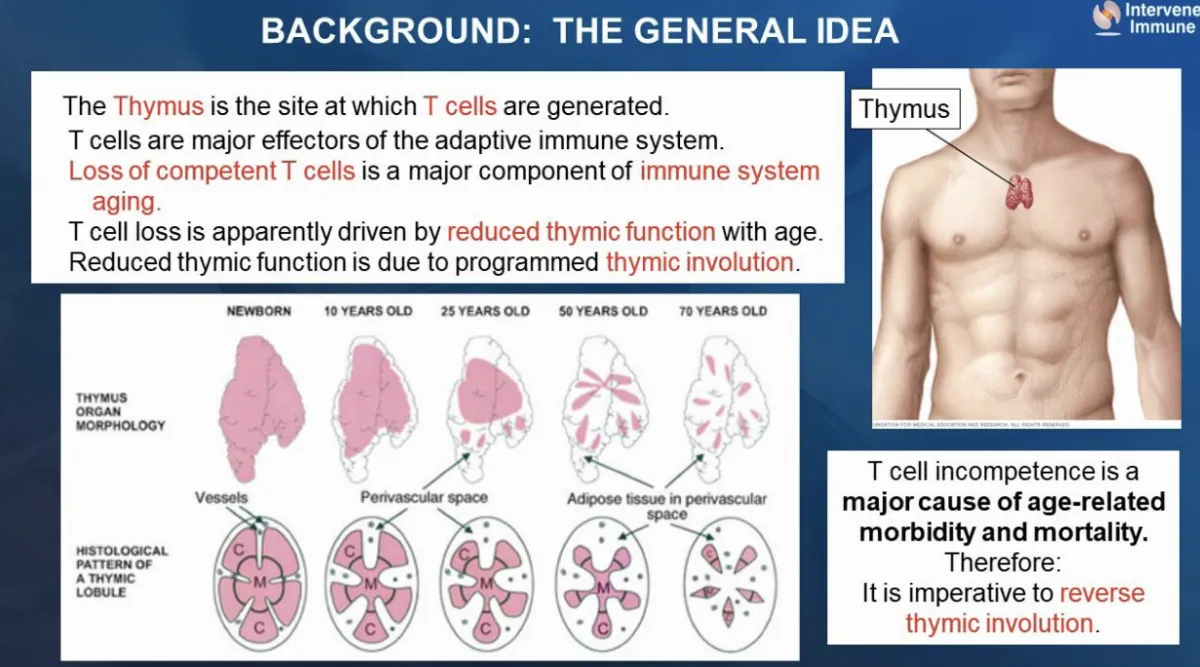
Under chronic stress, the immune system is the first major system to lose reserve, especially the thymus, which suffers a process known as “involution” under sustained glucocorticoid exposure ³.
Glucocorticoids don’t simply “suppress” immunity.
They cause thymocyte apoptosis. This results in the lymphoid tissue gradually atrophying, and the thymic output of naive T cells decreasing.
What makes this dangerous is that it rarely shows up in routine labs.
CBCs can look normal.
CRP can look optimal.
Inflammatory markers can appear controlled.
That’s because most diagnostics measure output numbers, not reserve and not function.
Human biology is extremely good at maintaining immune output under strain, at least in terms of adequate ranges of white blood cells, right up until it can’t anymore.
By the time immune collapse becomes visible, capacity has already been eroding for years.
Why Other Systems Fail Next
As the immune-mediated repair weakens, other systems are forced to work harder to keep performance intact.
Stress hormones remain elevated or are triggered more often, just to keep output from dropping.
Meanwhile the Mitochondria are pushed to produce energy without the downtime needed to rebuild.
Inflammatory signaling increases because damage that was once repaired by a functioning immune system, is no longer able to be repaired.
This is why people notice:
• slower recovery
• increased friction under stress
• reduced tolerance for load
…and all without obvious signs of disease.
The system hasn’t failed yet.
It’s just operating with less and less margin.
Why Decline Feels Sudden
People often say aging “hit them all at once.”
But that's not true.
The damage accumulated slowly while compensation hid it.
Until one day, immune regulation, mitochondrial resilience, and hormonal buffering all fail to the point, it can’t be ignored..
That’s when collapse becomes visible.
Not gradual decline, but sudden loss of capacity.
Why “Managing Stress” Is the Wrong Goal
You’re not going to live a stress-free life, so that should not be the goal.
The problem isn’t stress itself, either. It’s experiencing a chronic load without restoring the systems that make load sustainable.
Once we rebuild the upstream biology that determines whether stress produces adaptation or damage, we regain control.
That means restoring:
• immune repair capacity
• regenerative signaling
• mitochondrial resilience
• inflammation resolution
When those systems are intact, stress stops being destructive, not because stress disappears, but because the system can actually deal with it, due to a restoration of biological reserves.
Where the Biological Recode System Fits
This is the foundation of the Biological Recode System.
It doesn’t teach coping strategies to deal with stress.
It doesn’t “manage stress” or tell you to slow down.
It restores the upstream biology that determines whether stress produces adaptation or damage.
When reserve is rebuilt, compensation ends.
And performance stops costing you your future.
The only question is whether you correct the system early,
or after the cost becomes unavoidable.
Click below to apply to the Biological Recode System:
To Rewriting Your Biology,
Brenden Henry
Former Biomedical Engineer
Founder of Peptide Science Institute &
CuttingEdgeLongevity

support:
sms +1 877-834-9117
email [email protected]