
Why Your Labs Look Fine but You Feel Worse Every Year
(Why High Performers Age Faster Than Their Bloodwork Suggests)
By Brenden Henry
For many people, this is the most confusing part of aging because it doesn’t look like aging “on paper”.
You’re still functional.
Still productive.
Still “healthy” by conventional definitions.
But something is clearly degrading.
Energy isn’t what it used to be.
Recovery takes longer.
Sleep is lighter.
Focus requires more effort.
Resilience under pressure is lower.
And every time you run labs, the data keeps saying the same thing: Nothing is wrong.
That contradiction doesn’t mean the problem is psychological.
And it doesn’t mean the labs are useless.
It means you’re measuring the wrong layer.
Output is not capacity
Most standard bloodwork looks at downstream outputs:
Hormones
Lipids
Glucose
Inflammatory markers
Blood counts
These numbers tell you what the body is successfully holding together, but not how hard it’s working to do so.
Human biology is extraordinarily good at compensation.
You can maintain stable outputs for years while the systems responsible for repair are actually degrading underneath.
That’s why people can look perfect on paper while feeling progressively worse.
Their system is still holding the line.
But it’s doing so at an increasing biological cost.
Aging shows up first as loss of reserve
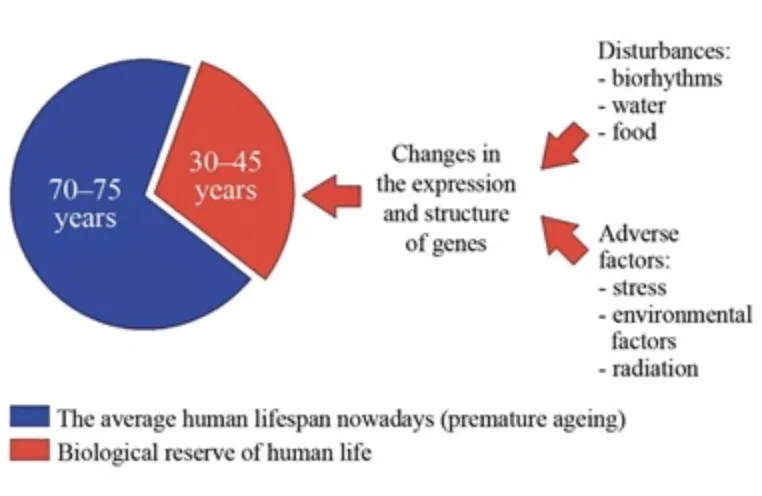
It's important to understand this distinction and it's especially relevant for high performers such as entrepreneurs, professionals and hard workers.
Output is what you can produce today.
Capacity is how much reserve you have left to produce it again tomorrow.
Labs mostly reflect output.
Aging shows up first as loss of capacity.
You can maintain performance for a long time while burning through your biological reserves, until the system no longer has margin.
That’s when decline appears to “suddenly” accelerate.
But it didn’t start suddenly.
Why This Happens: Stress Without Recovery
Nearly a century ago, physiologist Hans Selye described what happens when organisms are exposed to chronic stress without sufficient recovery ¹.
The key insight most people miss is that:
Stress does not have to feel psychological.
You can feel calm, motivated, and in control while your biology is still operating under chronic stress.
This is especially common in high performers and hard workers.
In the early phase, stress increases performance. Cortisol and stress mediators act as short-term stimulants.
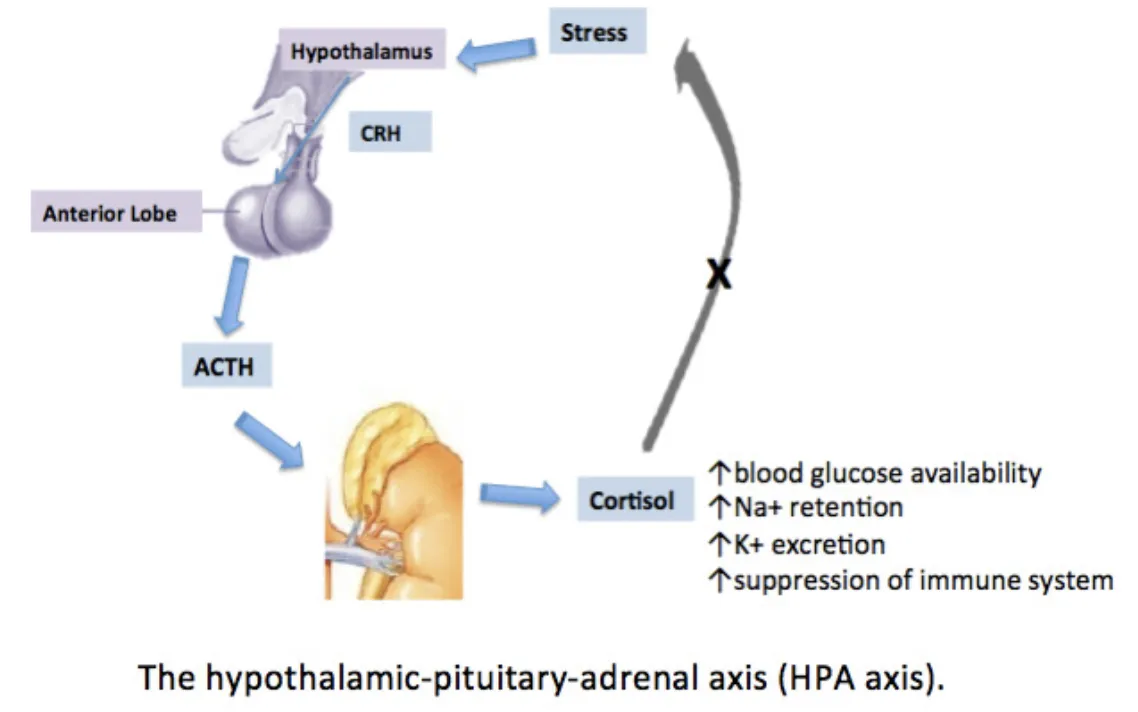
Output improves. Focus sharpens. Energy feels available.
High performers are often stuck within this compensation phase, and over time, that accumulates until they don’t have enough reserve to keep up.
It may not present itself in obvious ways either:
They may not collapse.
They may not burn out dramatically.
They can continue functioning, but it's a result of burning through stress hormones and forced output.
Over time, tasks feel heavier.
Recovery takes longer.
And in the later stage, the nervous system begins to structurally adapt in ways that reduce resilience and repair ².
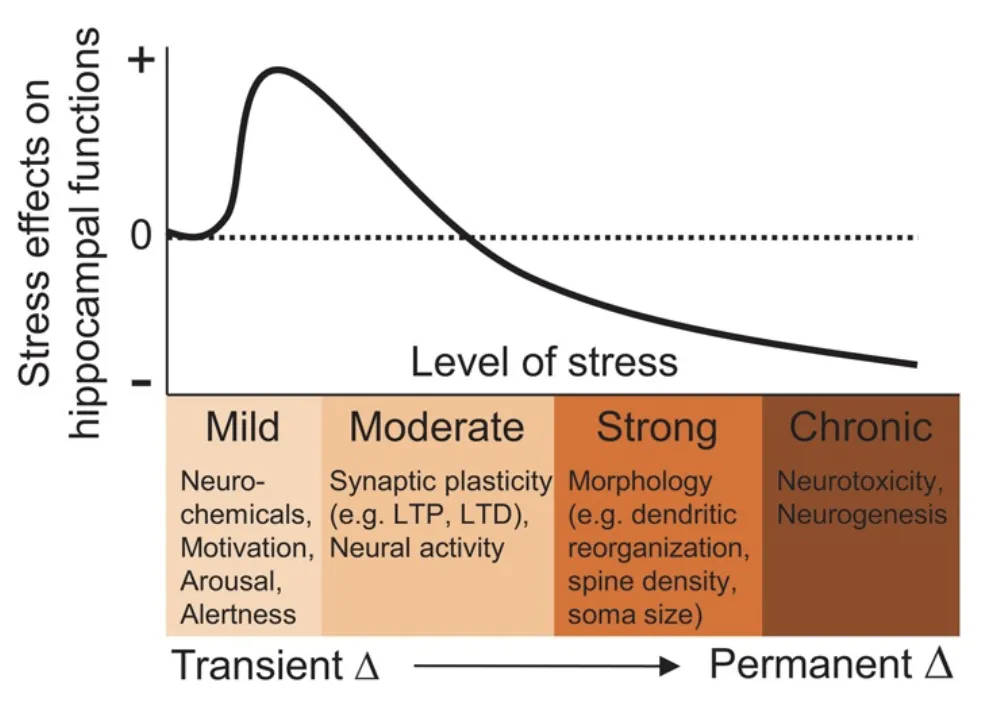
This isn’t psychological.
It’s under-recovery at the biological level.
And that's when you may begin to notice the decline.
While many bodily systems are affected by chronic stress, they don’t all fail at the same time.
The immune system is the first to lose capacity
It governs repair, regeneration, and inflammation resolution across every organ.
Over years, immune cells undergo senescence.
They don’t die when they should.
They stop coordinating repair effectively.
They secrete chronic, low-grade inflammatory signals.
This creates a background state of biological stress that forces every other system to compensate harder every year.
Energy production becomes fragile.
Recovery slows.
Repair becomes incomplete.
You still function, but at a higher biological cost.
Why Standard Labs Miss the Problem
Standard labs rarely catch this kind of decline because they’re looking in the wrong place.
They measure things like acute inflammation, cell counts and types, and gross immune activity.
Those markers tell you whether the immune system is reacting right now.
But they can’t tell you the functional capacity of those cells.
They do not tell you whether the immune system still has the capacity to coordinate repair, resolve inflammation cleanly, or regenerate tissue efficiently.
That failure happens long before anything looks “abnormal.”
Epigenetic drift under chronic stress: The reason for persistent decline
Chronic stress doesn’t just exhaust systems, it reprograms them on an epigenetic level.
Over time, repair-related gene expression is downregulated while stress-response pathways remain persistently active.
This locks the body into a survival state.
That’s why decline continues even when labs look fine: the body has learned to survive, not repair.
Why Optimizing Labs Still Fails
This is why people can aggressively optimize labs and still feel like they’re moving backward, aging, and suffering from increasing levels of decline in terms of how they feel and perform.
They’re optimizing certain outputs, not restoring structure.
I’ve seen this repeatedly with high-performing clients, including executives and entrepreneurs in their 40s–60s with near-perfect blood panels, yet struggling with afternoon energy crashes, 5–7 day recovery from workouts, and the growing sense that pushing harder isn’t working anymore.
Once the focus shifts to restoring immune-mediated repair capacity, and other upstream control systems, the felt decline reverses, even if labs remain largely unchanged.
The solution is Biological Recoding
This is where the Biological Recode System comes in.
While it can and does optimize your labs, it does far more than that:
It restores the upstream control systems.
This has a profound and significant effect on your body that you can feel.
recovery improves,
resilience returns,
and performance stops costing you your future.
Because the body stopped fighting to maintain the illusion of health, and was able to increase its biological reserves.
If you want to understand what actually drives that slow decline and how to reverse it on the DNA level…
The Biological Recode System explains it.
If you want to understand what’s actually been missing and why so many longevity efforts stall despite doing everything “right” read the Strategic Brief below.
To Rewriting Your Biology,
Brenden Henry
Former Biomedical Engineer
Founder of Peptide Science Institute &
CuttingEdgeLongevity

support:
sms +1 877-834-9117
email [email protected]